The Best Trail Running Shoes of 2026
Trail running | June 17, 2026
SAIL
May 28, 2026
Share


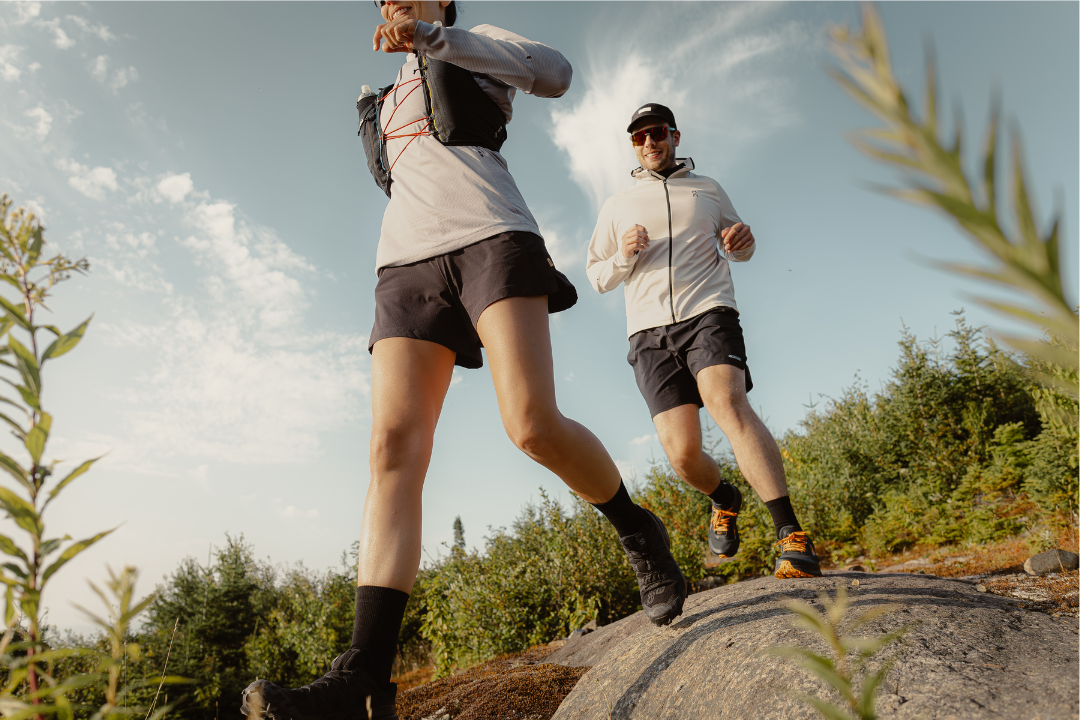
Over the past few years, the running shoe market has been completely transformed. PEBA foam and carbon plates have taken centre stage, making shoes lighter and faster than ever. What does that mean for you? More energy return, better protection, less weight on your feet. Whether you’re just starting out or chasing a new PB, this tech revolution is here to elevate your running game.
That said, more options for you to choose from means more complexity. Finding the right pair for your style can feel overwhelming. Good news: this guide breaks down the latest trends and criteria to consider to help you find the pair that will take your performance to the next level, whether you’re hitting the pavement or exploring new trails.
In this article:
The running world is going through a fascinating evolution. On one hand, max-cushion models keep winning over runners looking to soak up impact on long efforts. On the other, a growing number of athletes are gravitating back toward minimalist shoes for better ground feel and agility. This reflects an important reality: there’s no perfect shoe, just the right one for your gait, your stride, and your terrain.
That’s why shoe rotation has become a go-to strategy for staying injury-free. Alternating between a well-cushioned trainer for long runs and a more responsive model for speed work softens the repetitive impact on your joints. Once an elite-only approach, advanced tech has made it accessible to every runner.
What is shoe drop and why is it important? The drop (or heel-to-toe drop) is the height difference between the heel and the forefoot, measured in millimetres. It directly affects your posture and your running form.
Women’s running shoes are designed with a narrower toe box and a slimmer heel to closely match the shape of the female foot. Men’s running shoes generally feature wider toe boxes, and the cushioning is finely tuned for higher impact loads.
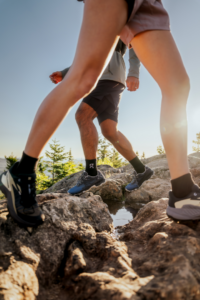
The difference between men’s and women’s shoes goes way beyond looks. It’s about ensuring proper pressure distribution and joint protection that’s dialled in for your body type.
Looking for the right shoe for your running style? Here’s what to consider:
| Criteria | Trail | Road | Long distance |
| Weight | 280-320 g | 240-280 g | 260-300 g |
| Drop | 4-8 mm | 6-10 mm | 8-12 mm |
| Cushioning | Firm and responsive | Moderate | Maximalist |
| Best for | Rugged terrain | Speed and performance | Comfort |
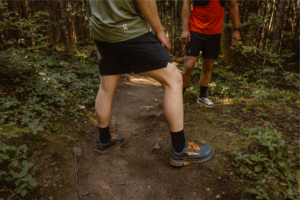
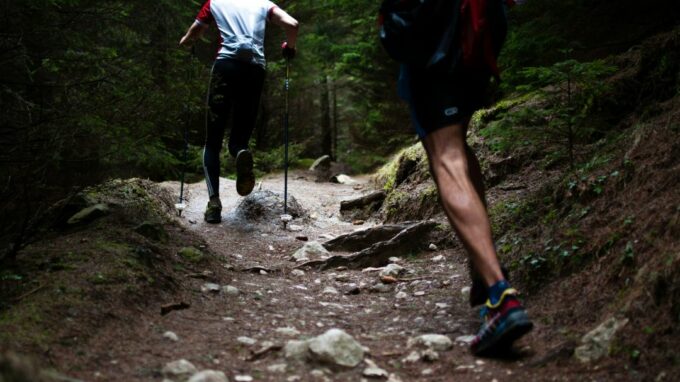
Trail running shoes are built for a completely different world than road shoes. Roots, slippery rocks and steep climbs demand outsoles with 4 to 6 mm lugs for grip, with enough spacing between them to prevent mud and debris buildup. Most models also feature a rock plate under the forefoot to protect every stride without adding weight.
As for traction, it relies on more than just lug shape and spacing. The level of stiffness of your outsoles plays a big role too. A softer outsole maximizes grip on wet rock but wears down faster; a firmer one holds up longer on dry trails. For the most technical sections, solid lateral support and anti-torsion technology make a noticeable difference.
Which brands lead the pack when it comes to trail running? Salomon, Merrell, La Sportiva, Saucony and Altra are among the most trusted names on the trail.
Not the right fit if: you mostly run on pavement. The aggressive lugs on trail shoes wear down fast on asphalt and can get slippery on wet surfaces.
Ready to find your perfect pair? Explore our trail running shoe selection.
When running on asphalt, every stride does two things at once: absorb impact and drive you forward. Modern foams handle both, delivering responsive cushioning that returns up to 85% of your energy with every step.
Once reserved for elite athletes, carbon and nylon plates are now found in a wide range of road running shoes, stabilizing the forefoot and generating propulsion at toe-off. No wonder this technology has made its way into many runners’ everyday half-marathon shoe rotation. The result: a smoother, more efficient stride that fights fatigue over long distances.
Which brands are leading the way for road running? Asics, New Balance, Saucony, On Running and Adidas are among the most popular with road runners.
Not the right fit if: you run on gravel paths or uneven surfaces. Road outsoles are optimized for asphalt grip with no deep lugs to stabilize your stride off the beaten path.
Confirm your choice by browsing our selection of road running shoes.
Beyond the 15 km mark, comfort becomes the ultimate priority. Your cushioning needs to absorb repeated impact without breaking down mid-run. Long-distance running shoes are built with generous foam volumes (with stack heights of 35-40 mm) and wider midsoles that keep you stable mile after mile.
Weight vs. durability: what should you prioritize? Ultralight foams deliver outstanding performance but tend to cost more and their properties become less effective after 400–500 km. Denser compounds, while 20-30 g heavier, hold up for 800 km and beyond. For everyday training, bet on durability. For race day and marathon shoes, that extra lightness could make all the difference at the finish line.
Which brands do long distance runners swear by? Asics, New Balance, Saucony, On Running, Adidas and Altra all have strong followings among distance runners.
Not the right fit if: your goal is speed over short distances. Durability-focused shoes are optimized for impact absorption, not the explosiveness you need for short intervals.
Here’s how to zero in on the best running shoes for your style, preferences and goals:
| Usage | Drop | Cushioning | Weight | Best for |
| Trail | 4-6 mm | Firm | 300-320 g | Traction |
| Road | 6-8 mm | Responsive | 240-260 g | Speed |
| Long distance | 10-12 mm | Maximalist | 280-300 g | All-day comfort |
| Versatile | 8 mm | Moderate | 270-290 g | Daily training |
Here are the signs of wear to watch out for:
When it comes to finding the perfect fit, nothing beats trying shoes on in store. Head to one of our 12 SAIL locations across Quebec and Ontario and let our experts guide you through our wide selection of road and trail running shoes. Testing a pair on the spot lets you check what no spec sheet can tell you: how the shoe feels, whether the width is right, how the heel locks in, and how the midsole feels underfoot when you actually move in it.