
Best Gear for Pike Fishing: Essentials from a Specialist
Fishing | October 6, 2026
SAIL
August 18, 2026
Share


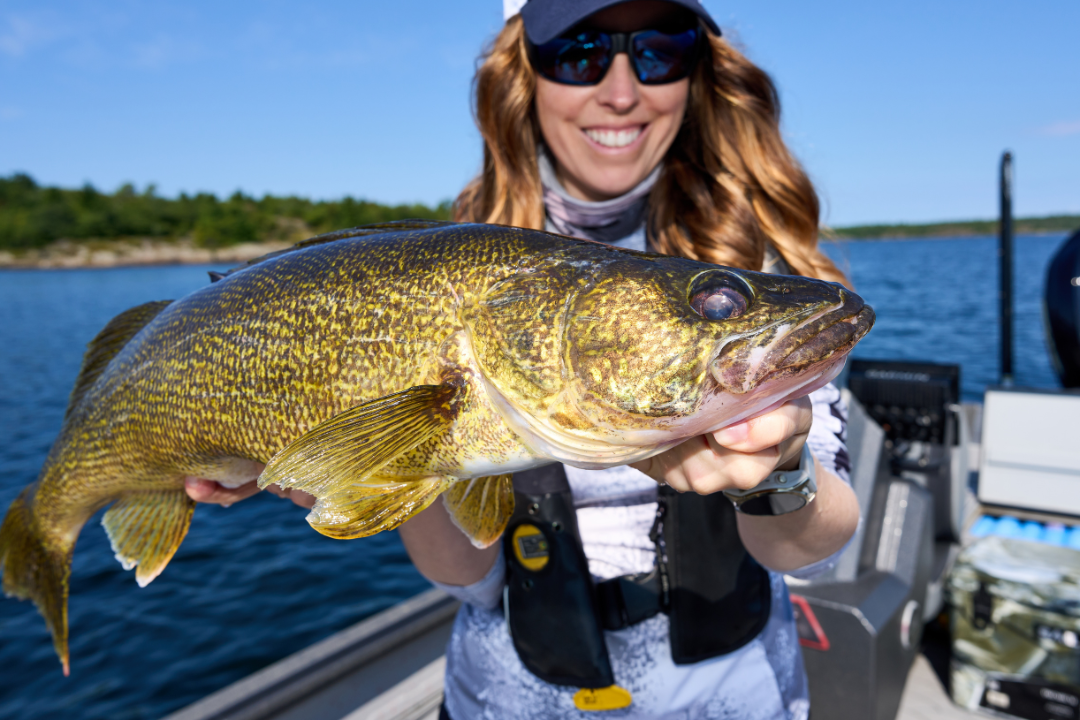
It’s hard to beat the excitement of watching a chunky golden walleye slide into the net. With the wide range of lakes and rivers that this species can be found in throughout the country, it’s not surprising that walleye is the most predominant species caught in Canada. Some of Quebec and Ontario’s most iconic walleye fishing destinations include the St. Lawrence River, the Bay of Quinte, and Lake Erie, just to name a few, and it’s exactly this kind of water that Ashley Rae, a knowledgeable walleye angler, has built her experience on. If you’re new to targeting this species or looking to fine-tune your skills, the knowledge and insights she shares in this article will help you understand walleye movement and behaviour, cover open water walleye tactics, and offer tackle and technique suggestions from spring through fall.
This article was written in collaboration with Ashley Rae.
In this article, you will learn about:
Spring marks the opening of walleye season across most fisheries in Ontario and Quebec, typically following the spawn. However, always be sure to refer to the fishing regulations for complete and up-to-date information:
Walleye spawn in areas with current or wind exposure, which keeps eggs oxygenated and prevents silt from settling on top of them. These spawning sites typically feature rock/gravel substrate and can occur in rivers, streams, on shoals, or along shorelines. Knowing the types of areas walleye spawn in is helpful as it provides insight into where to focus your efforts post-spawn as the season kicks off.
Initially, fish won’t be far from spawning areas with females transitioning off sooner than the males. Walleye don’t build nests like some other fish species. Rather, after the female lays eggs, males will fertilize them, the adults will move on, and there’s no guarding or further care. Productive areas to focus on post-spawn include adjacent points, drop-offs, shoals, river/stream mouths, before fish disperse to deeper waters.

Whether you plan to cast or troll, there are plenty of options when it comes to lures and techniques for walleye from post-spawn through to summer. Colder water means walleye can still be sluggish, so slower presentations and trolling speeds tend to produce better early in the season. Baitfish are smaller in size this time of year, having just hatched or wintered over, so smaller profiles tend to be effective.
Bottom contact baits such as jigs and Ned Rigs allow you to present your bait to fish holding tight to bottom or around structure. Jigs are a classic choice for walleye, whether tipped with soft plastic baits or live bait such as worms, minnows, or leeches. My personal favourite is a 1/4 oz. VMC Moon Eye Jig, and I normally thread on a curly tail grub such as a Mister Twister Meeny 3” or a Mister Twister 4” Curly Tail. This past spring I also had success with the new Rapala CrushCity Creeper.

Another popular jighead option at SAIL is the Northland Thumper Jig, which features a belly blade for added flash and vibration. The Ned Rig, initially a popular bass fishing technique, consists of a small finesse bait on a lightweight mushroom-style jighead and is also an effective option for walleye fishing.
A couple of my favourites when it comes to the Ned Rig include:
Moving baits allow you to cover water and present your bait throughout the water column to suspended or roaming walleye.
Some popular options for swimbait jigheads include the Berkley Fusion19 or the VMC Hybrid Swimbait Jig. Popular swimbait choices include the Berkley Ripple Shad, Berkley PowerBait Minnow, Z-Man MinnowZ, and the Keitech Easy Shiner.
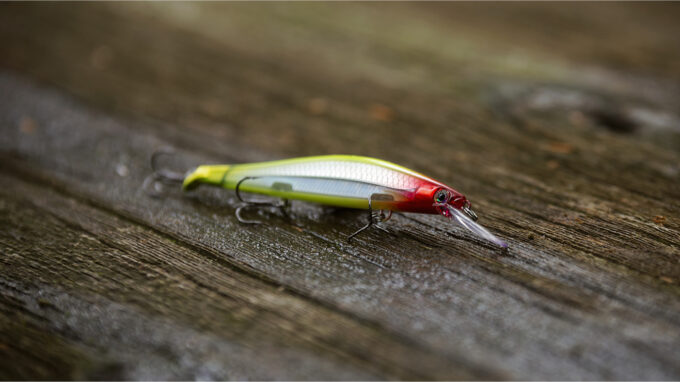
Crankbaits, whether cast or trolled, provide a way to target specific depths in the water column. A couple worth checking out include the Berkley Flicker Shad and the Rapala Shad Rap. Both come in jointed options as well. Lipless crankbaits are another solid option for casting or fishing vertically. I’m a fan of the Rapala Rippin Rap for the rattle and vibration it puts off. Jerkbaits are another great search bait, and that “pause” can be effective for triggering bites. Popular jerkbait options include the Rapala Husky Jerk, Rapala Shadow Rap, and the Rapala X-Rap. Some of these jerkbaits are also popular for trolling, with one of my spring favourites being the Berkley Flicker Minnow 9.
Worm harnesses paired with bottom bouncers tipped with live night crawlers have been part of my spring walleye line-up for a long time. This technique provides a great way to present my rig near bottom and cover water at the same time since worm harnesses are commonly trolled or strolled. SAIL carries a variety of worm harness options from Compac. I generally go with bright colours such as fire tiger in stained water conditions, and more natural colours like gold or silver in clear water conditions. As for the bottom bouncer, I like the Northland Slick-Stick. As a general rule, I aim for 1 oz. per 10 feet of depth to ensure I am getting my bouncer down to bottom.

Summer means it’s time to push out deeper as walleye transition to cooler waters. Much of the same techniques used in spring still work, but as water warms up and walleye become more active, picking up your presentation speed and upsizing to heavier jig heads, bottom bouncers, and deeper diving baits can be effective.
As water temperatures rise through summer, many lakes develop layers: a warmer, oxygenated top layer sitting above cooler deeper water, separated by a transition layer called the thermocline. Water below the thermocline often becomes lower in oxygen, pushing baitfish and walleye up into the thermocline and above. Your electronics will be very helpful here. On a Garmin sonar for example, the thermocline typically shows up as a distinct horizontal band on the sonar screen once you crank up your gain/sensitivity setting. This helps with dialling in exactly where fish are holding in the water column. Walleye will suspend over deep basins, points, and humps, particularly through the middle of the day. Once the sun starts to drop, fish will often move back up shallower to feed.
Deep-diving crankbaits/jerkbaits are great for covering deeper water. I typically focus more on trolling in the summer and into the fall using in-line planer boards. Some of my favourite crankbaits include the Rapala Down Deep Husky Jerk 12, Rapala Jointed Deep Husky Jerk, and the Berkley Flicker Minnow 9. My Garmin EchoMap fishfinder comes in handy here, helping me locate where bait and fish are in the water column so I can match my bait’s depth accordingly. Snap weights, like the Off Shore Tackle kit, can help get crankbaits deeper, and the Precision Trolling Data app takes the guesswork out by calculating how deep your lures are running. A note on barotrauma, unless I plan to keep fish for the table, I aim to run my lures in 30 feet or less to avoid bringing up fish from depths they can’t safely recover from.
Bottom bouncers are popular from spring through to fall. As water warms, I’ll often upsize my bottom bouncer weight to cover deeper water. It is also popular to upsize to larger blades as you pick up trolling speed, since faster speeds can support a bigger blade without over-spinning.
Vertical jigging or mid-strolling around deep rock piles, humps, and drop-offs, especially during low-light periods, can be very effective for landing summer walleye. Sizing up your jig, or hovering minnow-style baits such as the Z-Man Graph ShadZ in front of suspended fish, is a great way to trigger bites from fish holding tight to structure or hanging just off it.

Hair jigs are made with synthetic or natural fibres, such as bucktail, which pulses in the water creating natural-looking movement. I love to rip them through weeds and along breaklines for reaction strikes. You can also fish them with a slower lift-and-drop for less aggressive fish. A couple of great hair jig options include the VMC Moontail Jig and the Kalins Hand-Tied Bucktail.
Gliding jigs or balanced jigs, are compact, centre-weighted lures built to hang horizontally and dart erratically on the fall. Once thought of as only ice fishing lures, they’ve become a warm-weather staple as well. Work them with a snap of the wrist, then let them fall on a semi-slack line. Most bites happen on the fall rather than the lift. The Rapala Jigging Rap is the classic option, and sizing up as summer progresses is worth noting. Many anglers go with size #5 in spring, then up to a #7 or #9 as water warms and walleye push deeper.

During fall as the water temperatures begin to cool, many baitfish species concentrate in warmer water on lakes and rivers. Walleye follow closely behind, feeding heavily, making them easier to pattern once you’ve tracked down the bait. This is once again where your electronics will help significantly. As the surface water cools, it eventually mixes with the low-oxygen waters below in a process called turnover. This breaks down the thermocline and as such, walleye spread back out.
Fall is, without a doubt, my favourite time of year to target walleye, especially on the Bay of Quinte, a tributary of Lake Ontario. Every fall, a migration of Lake Ontario walleye funnels into the Bay, feed on bait and staging for the spring spawn. These fish grow to trophy size thanks to Lake Ontario’s rich forage base, and with them concentrated into tighter quarters inside the Bay, it creates an incredible angling opportunity.
Walleye frequently move shallower in the fall than they would in summer, especially during low-light periods, as they key in on baitfish pushing into flats, points, and structure. Larger profile baits tend to shine in fall, matching the bigger baitfish walleye are targeting as they bulk up for winter, since that same year’s baitfish have had all summer to grow and are larger in size than they were in the spring. Since summer patterns often carry into early fall, most of the tackle already covered in the Summer Tackle Box remains just as effective, especially before the fall turnover fully sets in.

Throwing swimbaits to mimic larger baitfish profiles at this time of year is a common approach for walleye anglers. The broad, kicking paddle tail puts out vibration to draw fish in. Work it with either a hop-and-pause retrieve or a straight, steady retrieve.
Blade baits
Blade baits are a great way to target fish vertically in the water column. Lifting or dropping this style of bait creates a fluttering vibration that draws their attention. One of my go-to blade baits is the Berkley Vibrato, it also makes a great ice fishing option!
Deep diving crankbaits/jerkbaits behind in-line planer boards are my go-to during the fall months, as mentioned, on the Bay of Quinte. I typically run baits anywhere from 10 to 30 feet down, utilizing snap weights to get even my shallower-running baits a little deeper. Some additional favourites include the Berkley Flicker Minnow 11, the Rapala Down Deep Husky Jerk 12, and the Reef Runner 800.
Successful walleye fishing is all about understanding how fish behaviour changes throughout the season and adapting your approach accordingly. By applying the walleye fishing tips and strategies covered here, you’ll be better prepared to locate fish, choose effective presentations and find success from spring through fall.
Key takeaways:

