Walleye Fishing: Seasonal Strategies and Lure Selection
Lures | August 18, 2026
SAIL
June 29, 2026
Share


Walleye is one of the most prized catches for anglers in Quebec and Ontario. But this elusive, unpredictable fish isn’t easy to fool. Success on the water comes down to a few key factors worth knowing.
Here are SAIL fishing expert Claude Bissonnette’s tips and recommendations to get it right.
In this complete guide, you will find everything you need to know to choose the best walleye fishing gear:
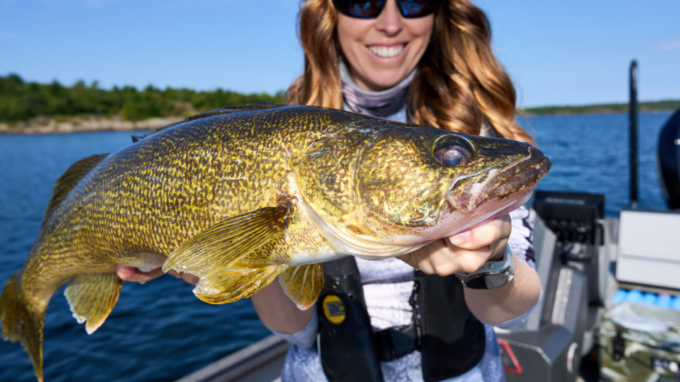
Walleye are known for their brilliant scales and flaky white flesh. They are a favourite among anglers who like to eat what they catch. They average 15 to 20 inches (38 to 50 cm) and 5 to 10 pounds (2 to 5 kg) and are among the most common fish in Quebec and Ontario lakes and rivers, making them easy to find no matter where you fish.
When does walleye fishing season open? It typically kicks off around mid-May (depending on the zone), coinciding with the opening of most outfitters in Quebec and Ontario. You can also fish for walleye in national parks, regional parks and wildlife reserves that offer day and multi-day packages as well as boat rentals.
Walleye colouring shifts with their environment, running deeper and richer in murky water and more washed out in clear water. Look for an olive-brown body with golden flecks along the sides, those trademark large glassy eyes, and a white tip on the lower tail fin. Not to be confused with sauger, which runs smaller and has rough cheeks and dark blotches on the dorsal fin.
Outsmarting a wary fish starts with the right tool. Rod length, power and action all need to match the technique you plan to use on the water. Here are specialist Claude Bissonnette’s top configurations.
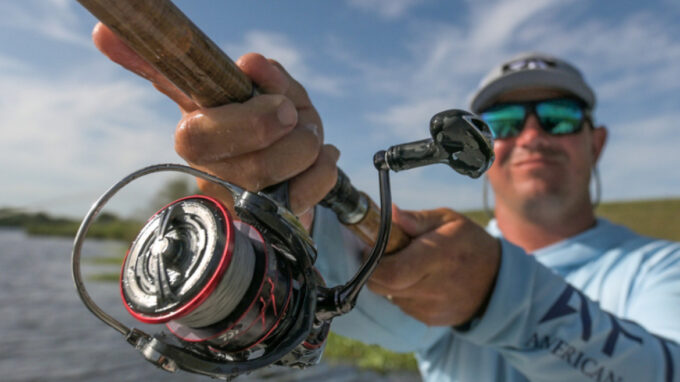
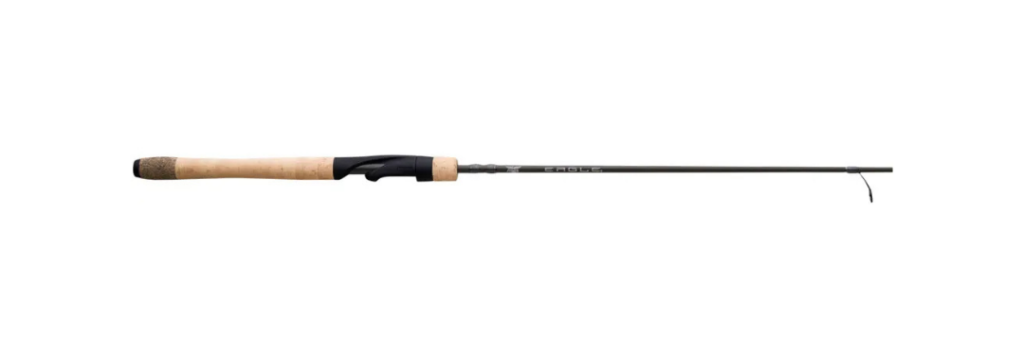
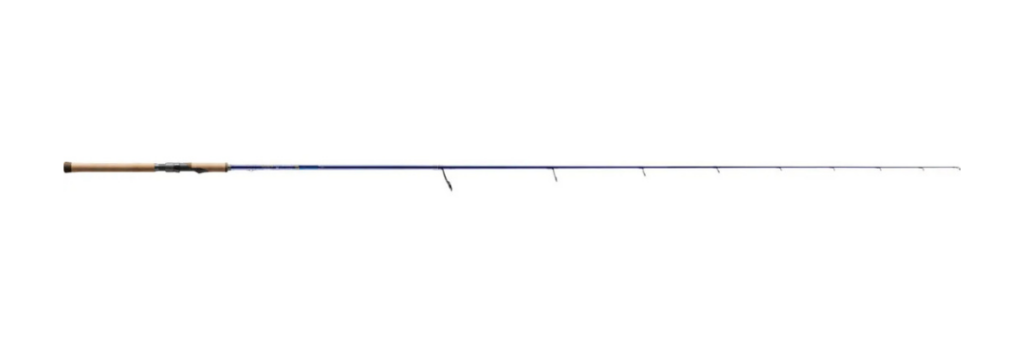
Jigging for walleye demands maximum sensitivity to feel subtle bites along the bottom. We recommend a shorter rod in the 6′ to 6′6″ range (1.8 to 1.98 m), with medium power and a fast or extra-fast action. Pair it with a size 2000 to 2500 spinning reel for a well-balanced setup. Two models stand out for this approach:
The Fenwick Eagle Walleye Spinning Rod
The St. Croix Legend Tournament Walleye Spinning Rod
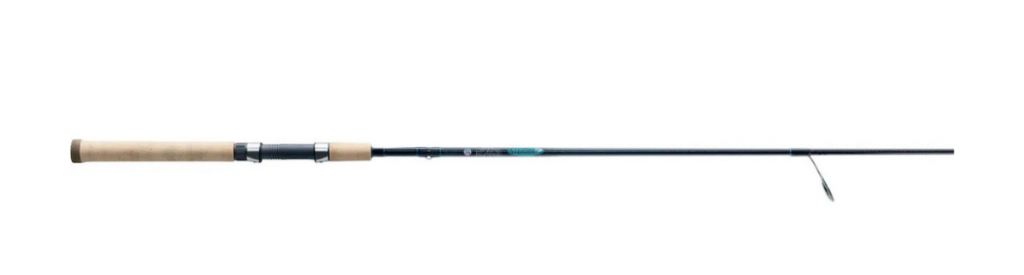
If you prefer covering water and trolling for walleye, the setup changes. Go with a longer rod in the 6′6″ to 7′ range (1.98 to 2.1 m), medium to medium-heavy power, and a moderate-fast or fast action. The extra flexibility absorbs line tension and keeps fish pinned through the fight. Pair it with a size 2500 to 3000 reel. One model stands out for this technique:
The St. Croix Premier Spinning Rod
To get the most out of your rod and reel, Claude recommends braided line. Its near-zero stretch is key for feeling bites and setting the hook solidly.
Walleye are opportunistic predators, but their wariness demands a careful presentation. Knowing which bait to use depending on the conditions is key to maximizing your chances. Live worms (often rigged on a bottom walker) remain one of the most effective options when fish are sluggish or hugging the bottom. That said, if you prefer a more active approach, artificial lures are hard to beat.
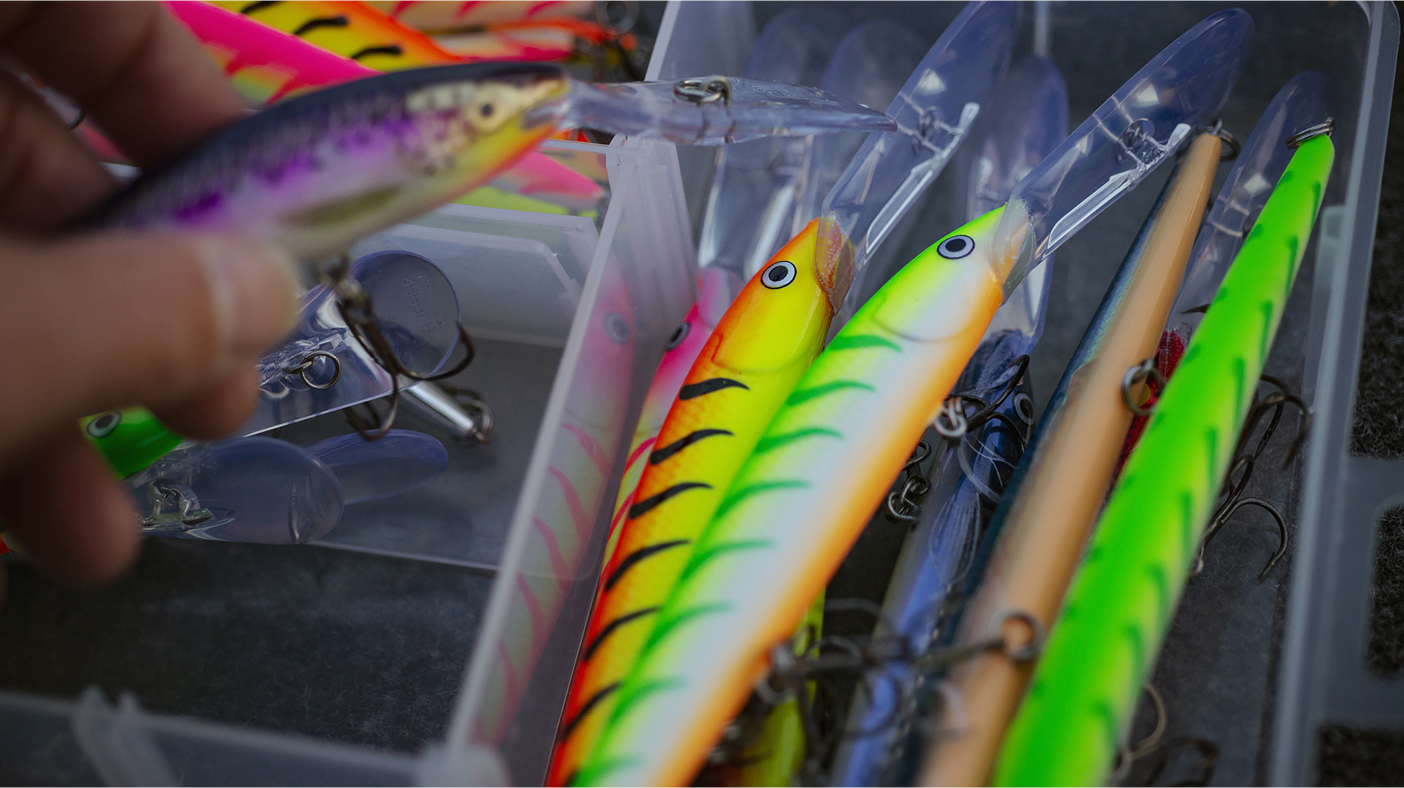
Crankbaits and jerkbaits are the go-to trolling lures for walleye. Some float, some suspend, and others are built to dive down to 10 to 20 ft. (3 to 6 m). To reach deeper walleye schools, look for lures with a long lip that gets them down fast.
Jig heads range from 1/8 oz. to over an ounce and are tipped with a soft plastic body imitating a small baitfish, leech, crayfish or worm. There are a wide range of soft baits designed specifically for walleye, in all kinds of shapes and colours.
Worm harnesses are wire rigs fitted with a spinning blade and one or two hooks loaded with a live worm. A bottom walker can be added up front to get the rig down to depth.
Your fishing licence, PFD, and bug spray are obviously at the top of the list. But if you want to locate fish and map out underwater structure, a fish finder is a must. Check out our complete guide to choosing the right fishing sonar for your needs.
Claude also recommends bringing a cooler with ice rather than a fish stringer, especially in warm weather, to keep your catch fresh. And don’t head out without these essentials:
Shop all fishing accessories and tools
Before loading up for your outfitter or wildlife reserve trip, run through our fishing trip checklist to make sure your clothing and safety gear are all accounted for.