
Fly Fishing: Expert Tips for Every Species
Trout Fishing | July 9, 2026
SAIL
May 14, 2026
Share


Claude Bissonnette, member of the SAIL team and avid fishing expert, shares his top gear recommendations for brook trout fishing. Grab these essentials and give yourself every advantage on your next outing.
In this article, you will find out about:
The brook trout, also known as speckled trout, is a highly sought-after fish known for:
Found throughout Quebec and Ontario, it is one of the most accessible species for anglers in both provinces. You can find it in countless lakes and rivers. Just check out our guide to the best brook trout fishing destinations in Quebec and Ontario for inspiration. Many regional parks, wildlife reserves and outfitters offer cabin and lodge stays, day fishing packages and boat rentals for anglers looking to tackle brook trout.
Easily recognizable by its skin scattered with red spots ringed in blue halos, the speckled trout also has small teeth, an orange belly, a small adipose fin behind the main dorsal fin, and a very slightly forked tail fin. Do not confuse it with the Arctic char, a generally longer fish that also features red spots, without blue halos and with a more deeply forked tail.
Claude Bissonnette recommends checking out fishing books, specialty magazines and websites for photos and descriptions so you can easily identify your catch and other freshwater fish species.
Your brook trout setup will vary depending on your technique (casting, trolling or fly fishing), but will generally include the following:
Go with a moderate-action spinning rod around 6.5 feet (1.9 metres) and a size 2000 to 2500 reel. If you’re trolling, opt for a fast-action spinning rod. It’s stiffer and better suited to the technique.
Claude also suggests going ultralight with a 5 to 5.5 foot (1.5 to 1.7 metres) rod and a size 500 to 1000 reel if you want to turn up the challenge and feel every bit of the fight.
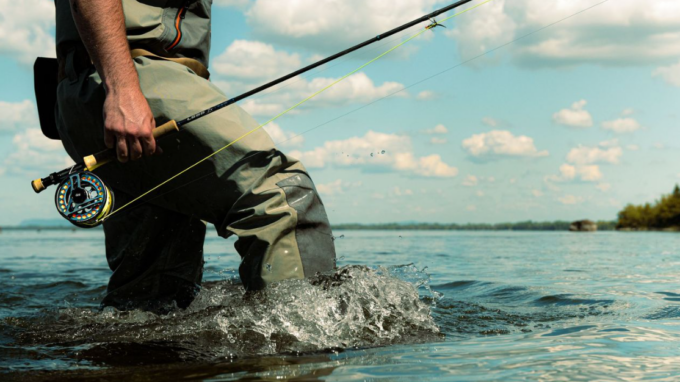
Opt for a fly fishing combo including a rod that is 6-8 to 7-9 feet long with a reel made to hold 4-7 fly fishing line.
| Technique | Recommended rod | Best reel |
| Spinning | 6 to 6.5 feet (moderate action) | 2000 to 2500 |
| 5 to 5.5 feet (ultralight) | 500 to 1000 | |
| Trolling | Fast action | 2000 to 3000 |
| Fly fishing | 7 to 9 feet (6‑ to 8‑weight) | 3/4 to 7/8 (for line weights 4 to 7) |
Claude recommends using:
Fresh, live earthworms work great for brook trout, whether you’re casting, trolling or still fishing. Just keep in mind that using live bait means you may not be able to catch and release.
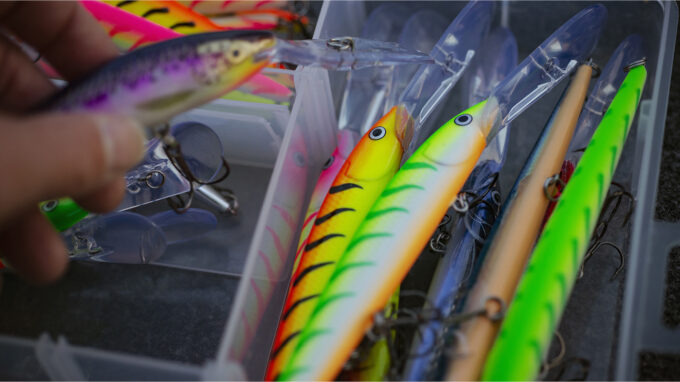
If you’d rather go for artificial bait, Claude recommends small crankbaits, plastic larvae imitations or soft plastic worms. Trout nuggets are another solid option worth having in your tackle box.
Some of the best artificial lures for brook trout include:
| Bait type | Effectiveness | Main advantage |
| Earthworms | ⭐⭐⭐⭐⭐ | Highly attractive natural scent |
| Soft plastic lures | ⭐⭐⭐⭐ | Versatility |
| Crankbaits | ⭐⭐⭐⭐ | Great for covering water |
Brook trout are generally drawn to:
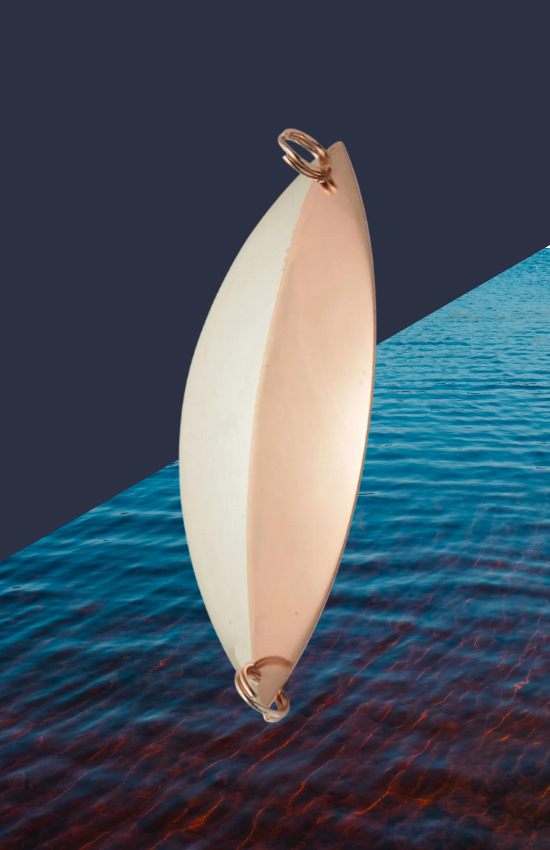
This makes wobbling spoons and spinners excellent lure choices. In fact, anglers of old used to fish with real metal spoons and kettle cutouts to attract fish, which is what inspired the legendary Clear Wobbler. As for colour, it really comes down to the body of water and its clarity.
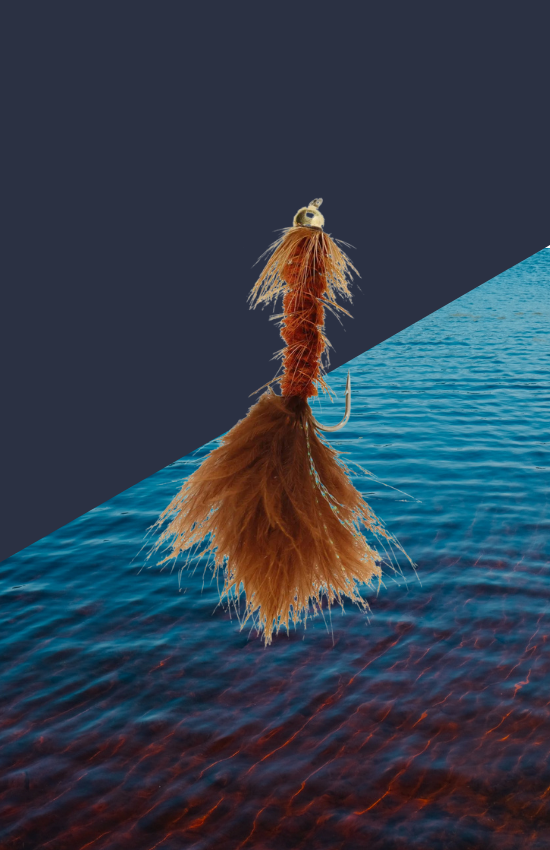
Dry flies are also a great option for catching speckled trout when fly fishing. The key is to match the size and colour of the insects they’re feeding on as closely as possible.
According to Claude Bissonnette, it is very important to adjust your lure depending on the depth of the water and the season.
Remember to bring a variety of spoons and lures in different colours to find the right combination.
It is also possible to mount two hooks on the bottom of your line, after setting your spoon, or to use a combo of a fly, a spoon, and a hook with a worm on the end if you want to try various combinations.
3 recommended spoons for brook trout fishing
Opt for dry flies such as March, Adam’s, Foam, or Royal Wulff.
You can also use small #4-6 streamer flies like Grey Ghost or Mickey Finn, or try 13-A, Hare’s Ear or Stone nymphs.
3 recommended flies for brook trout
In addition to your fishing licence to have with you at all times, your PFD and insect repellent, Claude Bissonnette suggests bringing a cooler and these other fishing essentials:
Brook trout are most active from May to June and again from September to October. Within those windows, early morning and late afternoon are your best bet for a good day on the water.