White-Tailed Deer Hunting: Top Tips, Techniques and Essential Gear
White-Tailed Deer Hunting | September 18, 2026
SAIL
September 23, 2026
Share


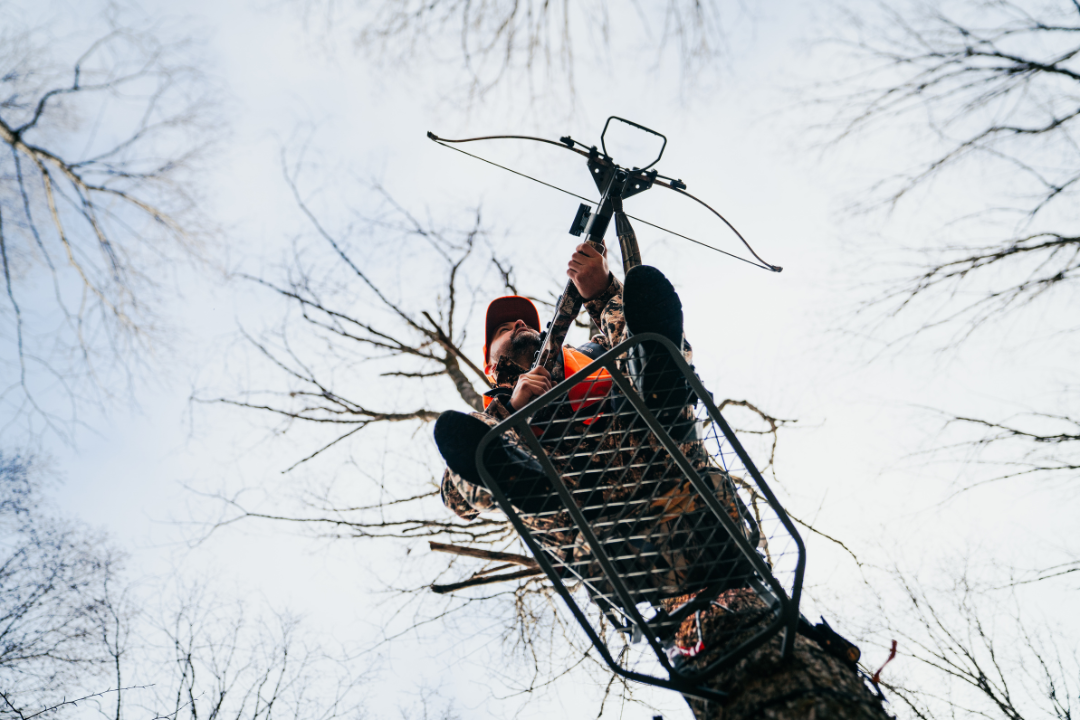
Trading your rifle for a bow or crossbow may seem like a simple switch, but it’s a whole different game. You have to get closer to the animal and slow down, making the whole experience that much more intimate, instinctive and stealthy.
That closeness and adrenaline are exactly what keep hunters coming back to it, year after year. And the bonus? A few extra weeks in the field, in areas that are often off-limits to rifle hunters. But once you’ve set the firearm aside, there’s still one big question left: bow or crossbow?
Before choosing, it’s important to note that the two disciplines don’t require the same level of commitment.
Bow hunting is serious business. It asks for consistent practice and solid physical conditioning to hold your precision at full draw, season after season.
Crossbow hunting, on the other hand, plays the efficiency card: quick to pick up, accurate right out of the gate. And since it doesn’t take years of practice to get there, that’s often what tips the scale between the two.
Find out which option best suits your needs with help from Martin Léonard, hunting specialist at SAIL.
In this article, you will discover:
The bow and crossbow seasons open up extra weeks that just aren’t available to firearm hunters. In Quebec and Ontario, some hunting areas are also reserved exclusively for bow and crossbow hunters. The result? Noticeably less hunting pressure, which means more abundant, less skittish game.
But you’ve still got to be ready to make the most of this exclusive window. Scout your shooting lanes ahead of time, and clear away any branches that could deflect an arrow or bolt at the critical moment. Even the best camouflage and the most precise shot won’t matter if your projectile gets stopped by an obstacle on its way to your target.
To learn everything about the legal side and get started with crossbow hunting, check out our full article How to use a crossbow for hunting and why?
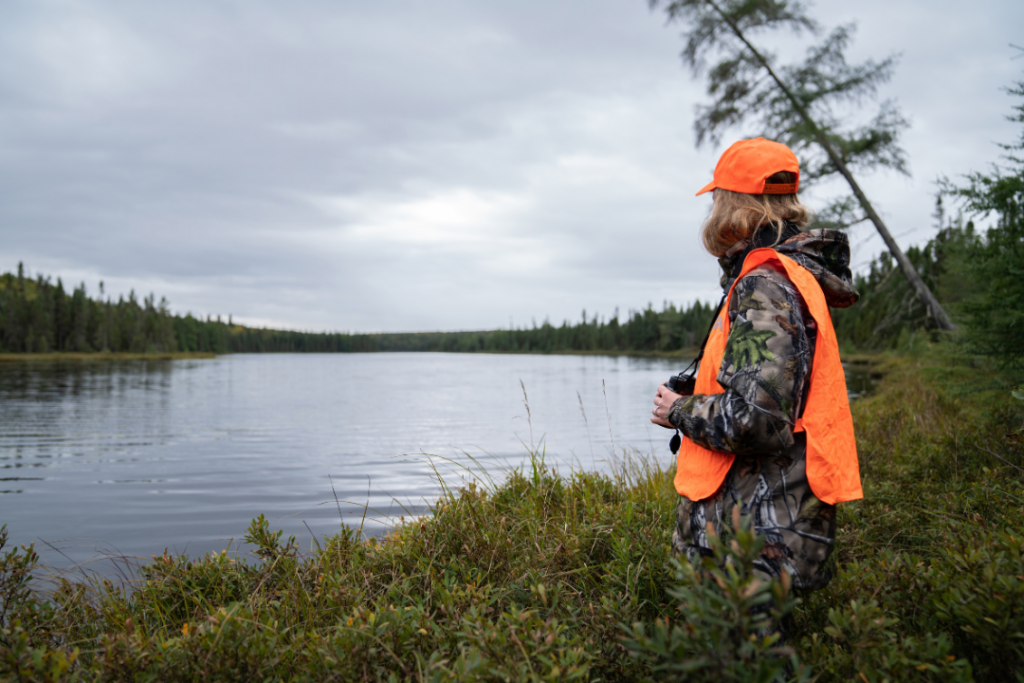
Before rifle season opens, the forest is still moving at summer’s slower pace. Whether it’s white-tailed deer or small game, the animals haven’t yet been disturbed by gunshots and the surge of human presence in their habitat.
They are still hitting their usual feeding spots, like marshy wetlands and wild apple trees, with a regularity that gets rarer and rarer as hunting pressure builds.
Temperature also influences game behaviour. During the hot days of late August and early September, animals limit their movement to the cooler parts of the day, including early morning and late afternoon, when the mercury drops below 15 °C (59 °F). When the heat sets in during the day, game retreats to denser cover, close to water sources.
That’s why it’s best to head out within two hours of sunrise and two hours before sunset, before the mercury climbs back up.
Less hunting pressure and milder temperatures add up to one thing: more predictable game. And that’s exactly what makes bow and crossbow hunting so rewarding early in the season.
Hunting with a bow or crossbow means closing the distance between you and the animal, a lot. We’re talking roughly 15 to 35 metres (49 to 115 ft.), depending on the hunting weapon and your experience level. That closeness changes everything, and you will need to bring your A-game.
Managing wind and scent becomes your top priority. Fabric brushing against a branch, a jerking motion while adjusting your position, a sudden shift in wind direction, and just like that, your shot is gone.
At close range, every move counts. Hunting camouflage becomes your best ally, so you stay out of sight and out of earshot.
There’s a mental side to this too. When the animal gets close, adrenaline spikes and your breathing quickens. Keeping your reactions in check takes the kind of composure that only comes with experience. It’s that mix of intensity and discipline that really sets close-range hunting apart from traditional long-range hunting.
While bow and crossbow hunting share the same playing field, they appeal to two very different types of hunters.
The bow wins hunters over with how easy it is to handle in thick brush, and how quickly you can get a second shot off – a real advantage when things move fast out in the field. It’s a hunting weapon that rewards instinct just as much as technique.
But that freedom comes at a cost. Holding your bow at full draw, aiming, then releasing with precision takes a level of physical and mental strength the crossbow simply doesn’t demand. Bow accuracy isn’t something you build in the weeks before hunting season. It’s built year-round, usually with several practice sessions a week to maintain the strength and muscle memory it takes. Without the time or the drive to keep up that routine, the gap with the crossbow quickly becomes the deciding factor.
Quick to master, especially if you’re already used to a scope, the crossbow offers the kind of stability that’s hard to beat. Once cocked, it stays rock steady while you line up your shot, giving you ethical accuracy at a distance, without years of practice behind you.
Another one of the crossbow’s biggest advantages? No effort needed to stay on target, unlike a bow, which has to be drawn at just the right moment. Cocked ahead of time, it gives you all the time you need to line up your shot, without any muscle fatigue. That said, a few things are worth thinking about before you buy: weight, bulk, and noise on release are all factors to weigh against your hunting style and the game you’re after.
How do you choose the right crossbow? There are three criteria to keep in mind: draw weight (in pounds), bolt speed (in feet per second), and the overall weight of the crossbow.
For white-tailed deer hunting, a crossbow with a speed of at least 350 fps (107 m/s) ensures enough penetration at an ethical distance. Pro tip: always try a crossbow in-store before buying, to make sure it matches your build and your hunting style.
Want to boost your odds of a successful harvest? Get yourself a portable bipod or tripod. This essential accessory lets you hold your aim for hours on end, a real lifesaver when the game is taking its time.
To dig deeper into the topic, check out our article How to use a crossbow for hunting and why?
Before you even think about buying a bow or crossbow, check the local regulations. The rules governing crossbow hunting vary from one area to another. Season opening and closing dates also change depending on the species.
Do you need a licence to hunt with a crossbow? Yes. In Quebec, you will need a hunting licence (big game or small game, depending on the species you’re after) as well as a valid hunter’s certificate to hunt with a crossbow. In Ontario, a hunting licence, hunter accreditation, and a valid Outdoors Card are required.
Some zones also have crossbow-specific restrictions, especially during archery and crossbow season. Make sure to check:
These details change from year to year, so always confirm them before heading out.
For full details on crossbow hunting regulations, check out our article How to use a crossbow for hunting and why? as well as the Gouvernement du Québec and Government of Ontario websites.
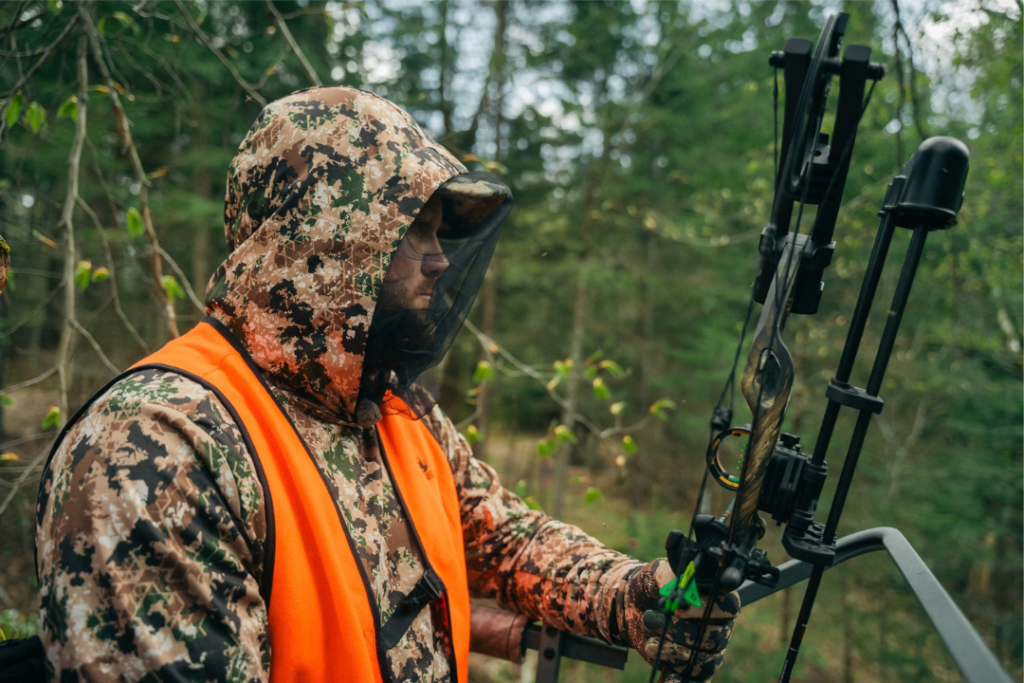
Once you’ve settled on your hunting weapon, here’s the gear that makes all the difference out in the field:
Where can you buy a crossbow? At SAIL, in-store or online. Our team can guide you based on your build, your budget, and the game you’re after.
Some hunters go for the bow, drawn to the instinct and athletic challenge it requires, even with the steady practice and physical conditioning that come with it. Others go for the crossbow, for its quick and accessible transition from rifle hunting, without giving up any precision. Whichever you choose, both disciplines open the door to a longer, stealthier season, filled with adrenaline!
Share